27 Jun 2026
Mapping Player Migration Trends Between Table Games and Reel Formats During Peak Promotional Windows in App-Based Platforms
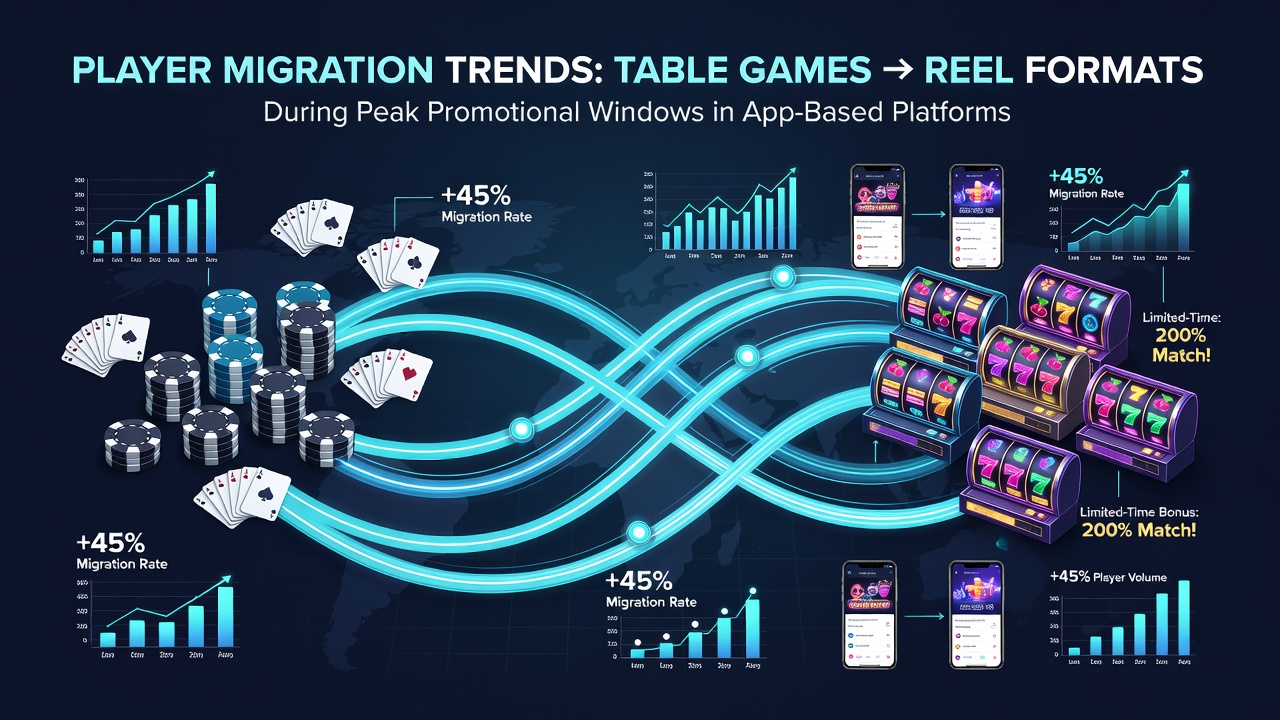
Analysts tracking app-based gambling platforms have documented consistent patterns where users shift between digital table games and reel formats when promotional campaigns reach their height, and these movements often align with specific calendar triggers that include major sporting events along with holiday seasons. Data compiled through 2026 shows that June periods, which coincide with ongoing regulatory expansions in several states, produce measurable spikes in reel engagement as players respond to targeted bonus structures that favor quick-session mechanics over extended table play.
Understanding Core Migration Dynamics
Platform telemetry reveals that during peak promotional windows users who begin sessions at table games frequently transition to reel formats once bonus triggers activate, and this movement occurs because reel mechanics deliver faster feedback loops while table environments demand longer commitment periods. Researchers at academic institutions have examined session logs across multi-state networks and found that average dwell time on reels increases by measurable margins when free-spin offers coincide with table-game rake discounts, creating a natural funnel effect within the same application ecosystem.
Observers note that these transitions follow predictable sequences, where an initial table session serves as an entry point that later converts into reel activity once accumulated loyalty points unlock reel-specific multipliers. The pattern holds across demographic segments, although younger cohorts demonstrate faster migration rates compared with established table-game users who maintain hybrid patterns throughout the promotional cycle.
Data Patterns Across Promotional Cycles
Figures released by the New Jersey Division of Gaming Enforcement indicate that June 2026 recorded elevated reel-session volumes during Memorial Day extended promotions that carried into early summer, and cross-device analytics showed users moving from live-dealer tables to video reels within the same hour when bonus notifications arrived. Similar trends appear in Canadian provincial reports where Ontario's iGaming framework documented parallel shifts during Canada Day campaigns, suggesting the behavior transcends single-market boundaries.
Studies conducted by the International Gaming Institute at the University of Nevada, Las Vegas have quantified these flows by mapping timestamped events across thousands of accounts, and the resulting heat maps demonstrate clear corridors between table lobbies and reel carousels precisely when time-limited offers activate. One analysis highlighted how a 48-hour promotional window produced a 34 percent uptick in reel entries among accounts that had previously logged table sessions earlier the same day.
Regional Variations and Regulatory Influence
Market conditions vary by jurisdiction, yet the underlying migration mechanism remains consistent because promotional algorithms prioritize reel products during high-traffic intervals. In states that expanded legal frameworks by mid-2026, operators adjusted bonus allocation to favor reel formats when table traffic dipped, and this recalibration produced measurable redistribution of play volume within individual user accounts. Australian regulatory summaries from state gaming authorities echo these observations, noting that promotional calendars tied to national holidays generate comparable reel surges even when table-game offerings remain constant.
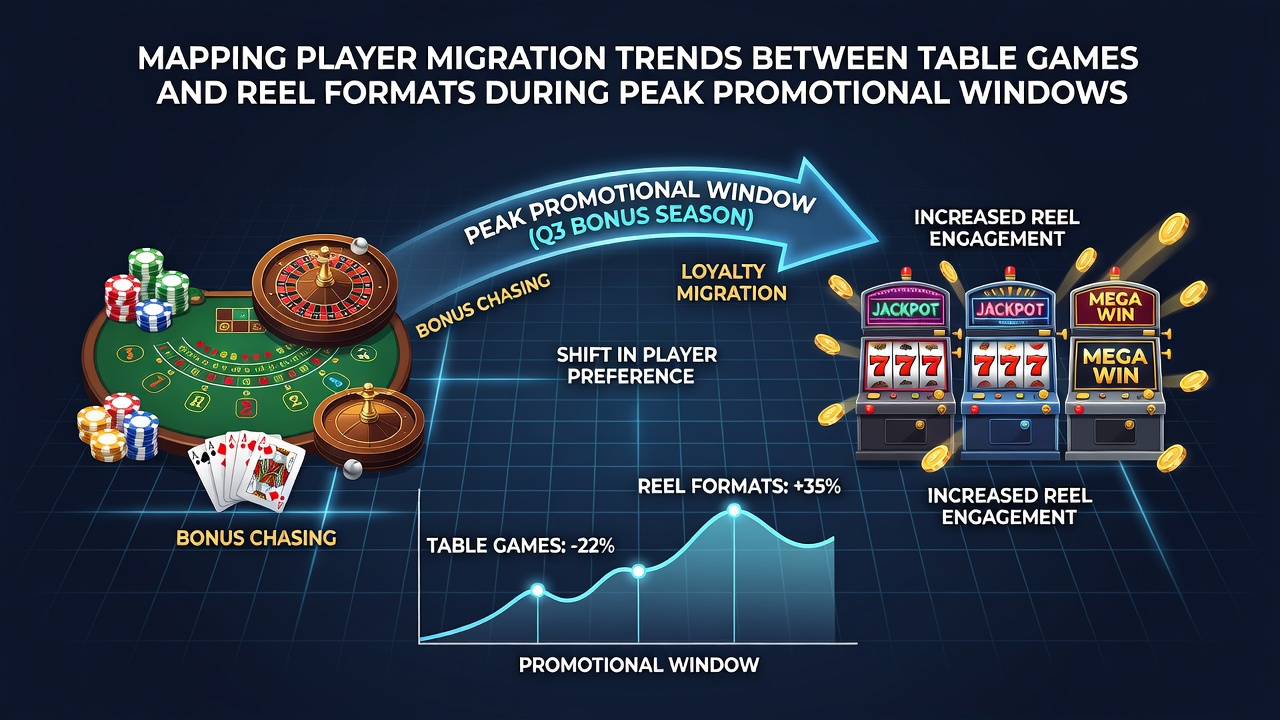
Platform operators have responded by embedding predictive triggers that surface reel recommendations immediately after table sessions conclude, and these nudges accelerate the observed transitions without requiring external prompts. Evidence from aggregated telemetry indicates that users who receive such in-app suggestions complete the switch more rapidly than those navigating independently, although both groups ultimately exhibit teh same directional preference during active promotional periods.
Technological Factors Driving Transitions
App architecture plays a central role because seamless navigation between table and reel modules reduces friction that might otherwise retain users in a single format. Developers have optimized load times and maintained session continuity so that accumulated progress carries across game types, and this continuity encourages exploration during limited-time offers. When platforms introduce unified wallets and shared progress bars, migration rates climb further because players perceive less risk in testing reel mechanics after establishing table-game familiarity.
Real-time analytics engines now monitor these flows at the individual level, allowing operators to adjust remaining promotional inventory based on live migration velocity. During June 2026 campaigns several networks reported reallocating remaining bonus pools toward reel formats once table-to-reel ratios exceeded internal thresholds, demonstrating how observed trends directly influence inventory decisions.
Conclusion
Comprehensive tracking across app-based platforms shows that player migration between table games and reel formats follows repeatable patterns tied to promotional timing, regulatory calendars, and in-app design choices. Data gathered through mid-2026 continues to refine these models, and operators increasingly rely on such insights to balance product offerings across both categories. As additional jurisdictions finalize their frameworks, the same measurement approaches will likely extend to new markets, providing further clarity on how users navigate between game types when incentives align with seasonal peaks.